
Burrowing Owl: how to recognise it
A bird of North America and South America. Learn the marks that make it easy to identify, then practise with real photographs in Lore.
Practise with real photosAll species guides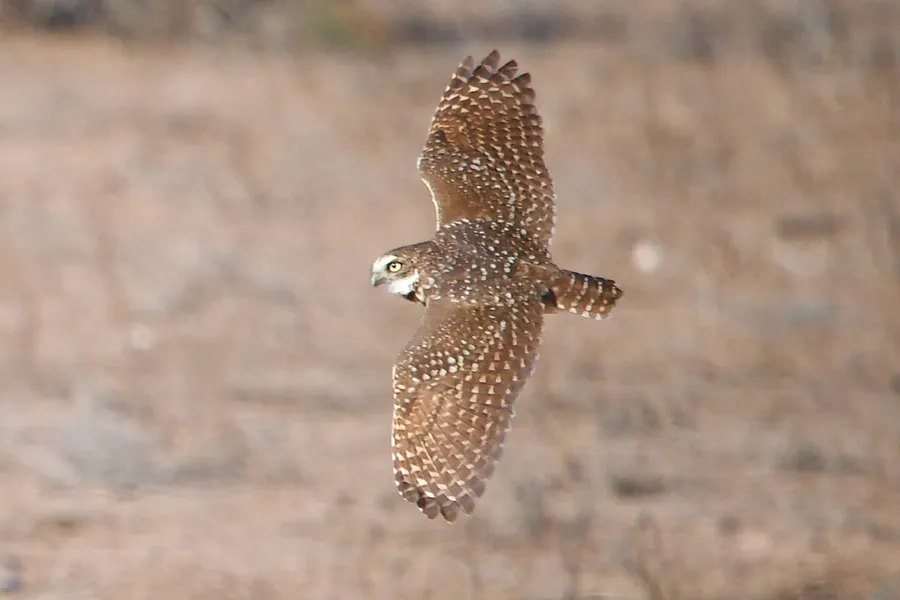
Photo © Bill Levine · CC BY · iNaturalist · all photo credits
- Scientific name
- Athene cunicularia
- Family
- Typical Owls
- Size
- About 24 cm
- Habitat
- Open grassland, deserts and farmland
- Found in
- North America and South America
The key marks
Small brown owl with white spots, long legs, a white chin and white eyebrows. It stands upright on the ground and bobs. Little Owl is stockier with shorter legs and more perches in trees and on buildings.
Voice
A soft 'coo-hoo'; chattering and rasping when alarmed.
Good to know
It nests in burrows dug by other animals, such as prairie dogs and ground squirrels.
Do not confuse with
Compare it with the Little Owl. Look at the marks above one by one rather than the overall colour, and practise telling the two apart with real photos.
Where and when
You can expect to find it in open grassland, deserts and farmland. It is especially common in Brazil and Argentina. Distribution changes with the seasons and from year to year, so check a recent local observation source before you go looking.