
Eurasian Collared-Dove: how to recognise it
A bird seen on most continents. Learn the marks that make it easy to identify, then practise with real photographs in Lore.
Practise with real photosAll species guides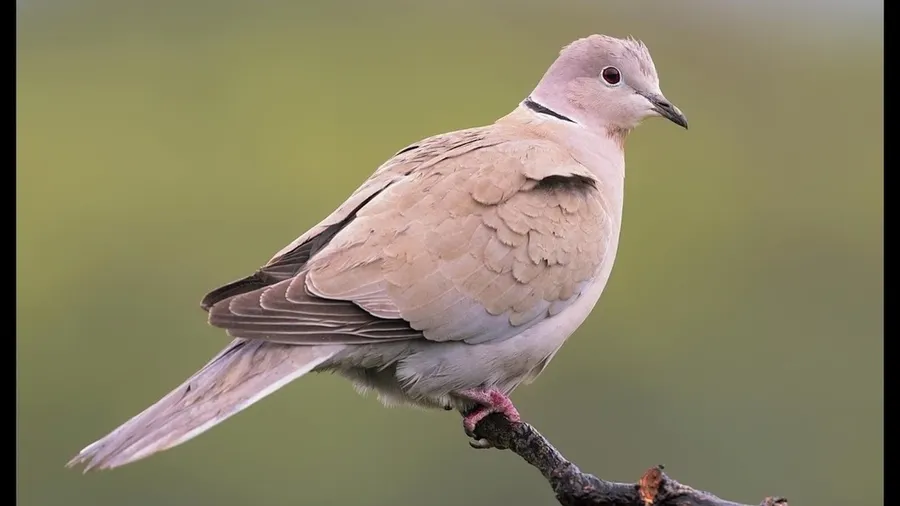
Photo © mattecasti · CC BY-NC · iNaturalist · all photo credits
- Scientific name
- Streptopelia decaocto
- Family
- Pigeons and Doves
- Size
- About 32 cm
- Habitat
- Towns, villages and farmyards
- Found in
- Europe, Africa, Asia, North America and South America
The key marks
Pale sandy-grey dove with a black half-collar on the neck and white under the tail tip. Turtle Dove is smaller, with a scaly orange-and-black back and a striped neck patch.
Voice
A monotonous 'koe-KOE-koe', repeated endlessly from a roof or wire.
Good to know
It only reached the Netherlands around 1950 after spreading all the way from the Balkans.
Do not confuse with
Compare it with the European Turtle-Dove. Look at the marks above one by one rather than the overall colour, and practise telling the two apart with real photos.
Where and when
You can expect to find it in towns, villages and farmyards. It is especially common in Greece, Morocco, Türkiye and Mexico. Distribution changes with the seasons and from year to year, so check a recent local observation source before you go looking.