
Mallard: how to recognise it
A bird seen on most continents. Learn the marks that make it easy to identify, then practise with real photographs in Lore.
Practise with real photosAll species guides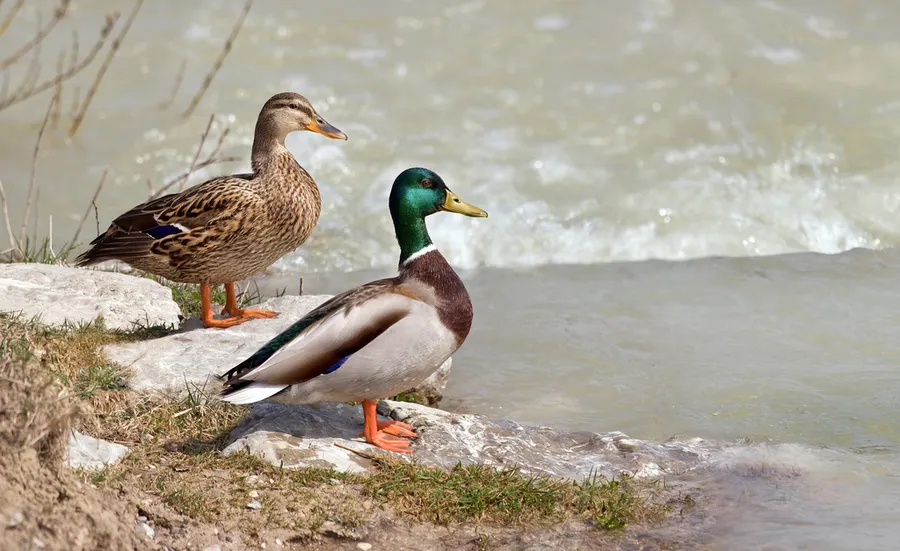
Photo © anonymous · CC BY-SA · iNaturalist · all photo credits
- Scientific name
- Anas platyrhynchos
- Family
- Ducks, Geese, and Swans
- Size
- About 50–65 cm
- Habitat
- Almost any water: ponds, lakes, rivers, canals and town parks
- Found in
- Europe, Africa, Asia, North America, South America and Oceania
The key marks
The male has a glossy green head, a white neck ring, a chestnut chest and a yellow bill. The female is mottled brown with an orange-and-dark bill and a blue wing patch edged with white.
Voice
The female gives a loud quack; the male a softer, rasping note.
Good to know
It is the ancestor of most domestic ducks, and only the female gives the classic loud quack.
Where and when
You can expect to find it in almost any water: ponds, lakes, rivers, canals and town parks. It is especially common in the Netherlands, the United Kingdom, Sweden and Poland. Distribution changes with the seasons and from year to year, so check a recent local observation source before you go looking.