
Marabou Stork: how to recognise it
A bird of Europe, Africa and North America. Learn the marks that make it easy to identify, then practise with real photographs in Lore.
Practise with real photosAll species guides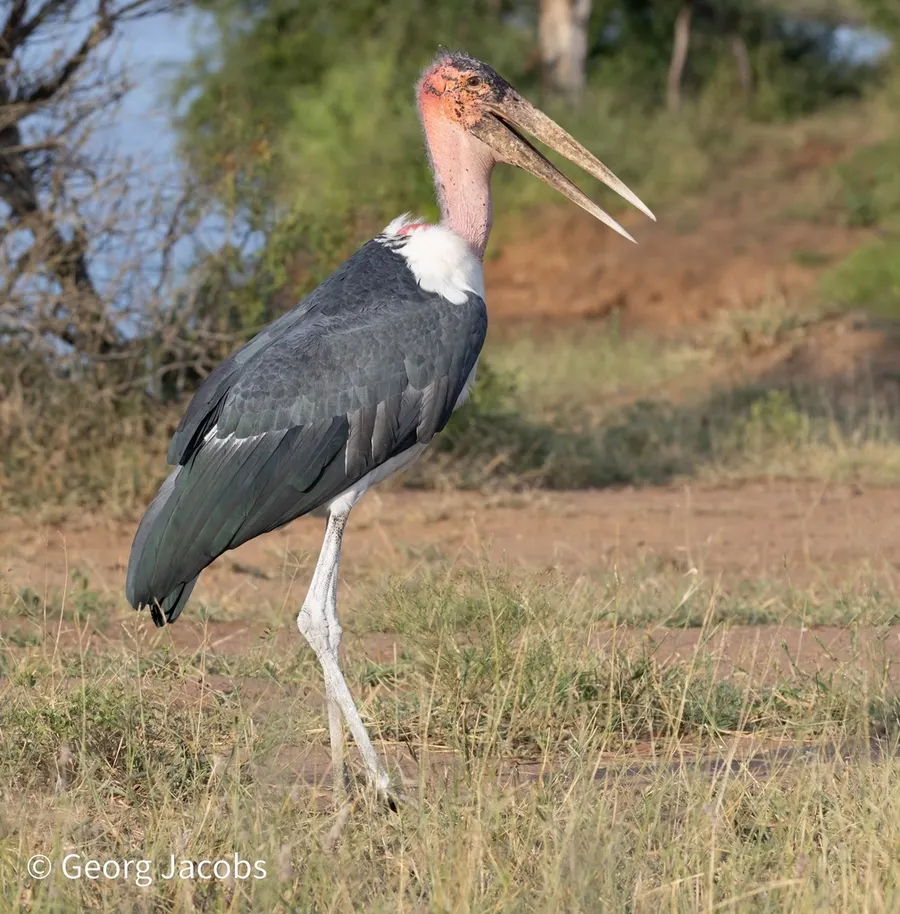
Photo © ugqira52- · CC BY-NC · iNaturalist · all photo credits
- Scientific name
- Leptoptilos crumenifer
- Family
- Storks
- Size
- About 150 cm
- Habitat
- Savanna, wetlands, rubbish dumps and towns
- Found in
- Europe, Africa and North America
The key marks
Huge, ungainly stork with a bald pink head, a big hanging throat pouch, a thick wedge-shaped bill, a dark grey back and white underparts. Yellow-billed Stork is smaller and pinkish-white with black wings and tail, a slender yellow bill and a red face.
Voice
Mostly silent; croaks and clatters its bill at the nest.
Good to know
Its wingspan can reach nearly 3 metres, and it feeds on carrion beside vultures as well as on fish and rubbish.
Do not confuse with
Compare it with the Yellow-billed Stork. Look at the marks above one by one rather than the overall colour, and practise telling the two apart with real photos.
Where and when
You can expect to find it in savanna, wetlands, rubbish dumps and towns. It is especially common in Kenya and Tanzania. Distribution changes with the seasons and from year to year, so check a recent local observation source before you go looking.