
Neotropic Cormorant: how to recognise it
A bird of North America and South America. Learn the marks that make it easy to identify, then practise with real photographs in Lore.
Practise with real photosAll species guides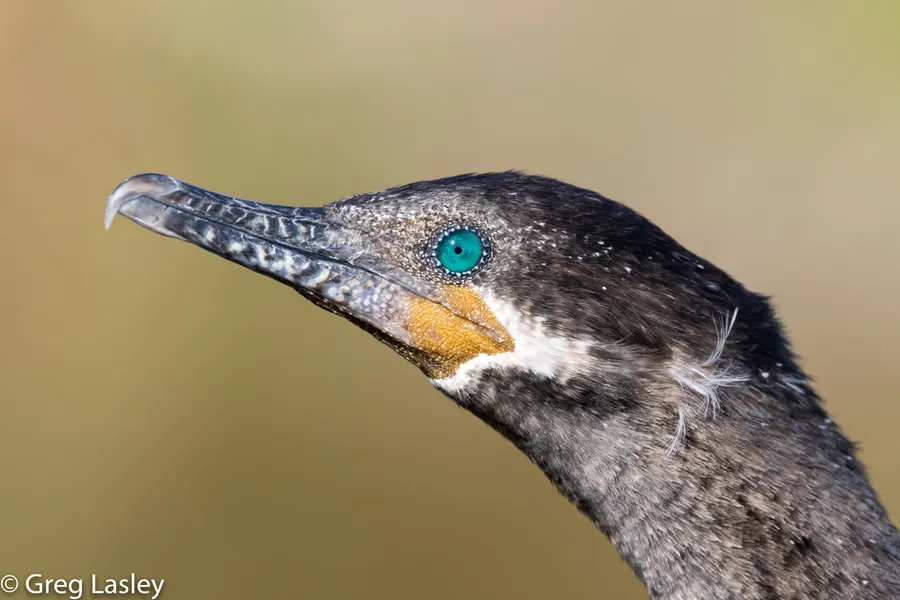
Photo © Greg Lasley · CC BY-NC · iNaturalist · all photo credits
- Scientific name
- Nannopterum brasilianum
- Family
- Cormorants and Shags
- Size
- About 64 cm
- Habitat
- Lakes, rivers, lagoons and coasts
- Found in
- North America and South America
The key marks
Slim, dark cormorant with a long tail, a small yellow throat pouch edged with a white triangle, and a fairly thin bill. Double-crested Cormorant is bigger and heavier with a larger orange pouch.
Voice
Mostly silent; grunts and croaks at the colony.
Good to know
One of the most widespread cormorants of the Americas, found from Texas to Tierra del Fuego.
Do not confuse with
Compare it with the Double-crested Cormorant. Look at the marks above one by one rather than the overall colour, and practise telling the two apart with real photos.
Where and when
You can expect to find it in lakes, rivers, lagoons and coasts. It is especially common in Chile, Peru, Argentina and Brazil. Distribution changes with the seasons and from year to year, so check a recent local observation source before you go looking.