
Species guide
Wild Turkey: how to recognise it
A bird seen on most continents. Learn the marks that make it easy to identify, then practise with real photographs in Lore.
Practise with real photosAll species guides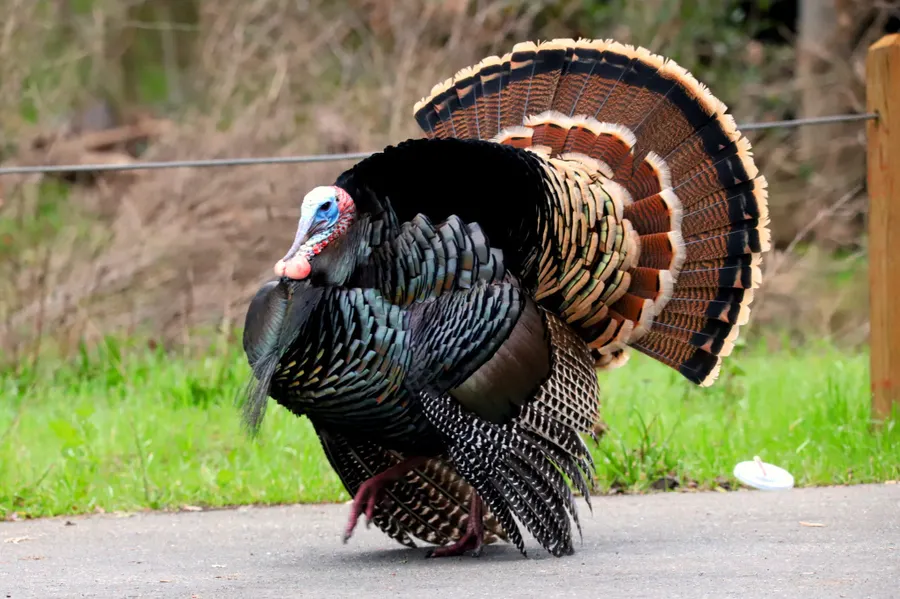
Photo © Matt K · CC BY-NC · iNaturalist · all photo credits
- Scientific name
- Meleagris gallopavo
- Family
- Pheasants, Grouse, and Allies
- Size
- About 90–125 cm
- Habitat
- Woodland, forest edges and fields
- Found in
- Europe, Africa, Asia, North America, South America and Oceania
The key marks
A large dark bird with a bare blue-and-red head and a dangling wattle. Males fan the tail and puff out the chest in display.
Voice
The male’s famous “gobble”.
Good to know
Despite its size, a wild turkey can fly short distances and roosts high in trees at night.
Where and when
You can expect to find it in woodland, forest edges and fields. It is especially common in the United States. Distribution changes with the seasons and from year to year, so check a recent local observation source before you go looking.