
Bare-faced Ibis: how to recognise it
A bird of South America. Learn the marks that make it easy to identify, then practise with real photographs in Lore.
Practise with real photosAll species guides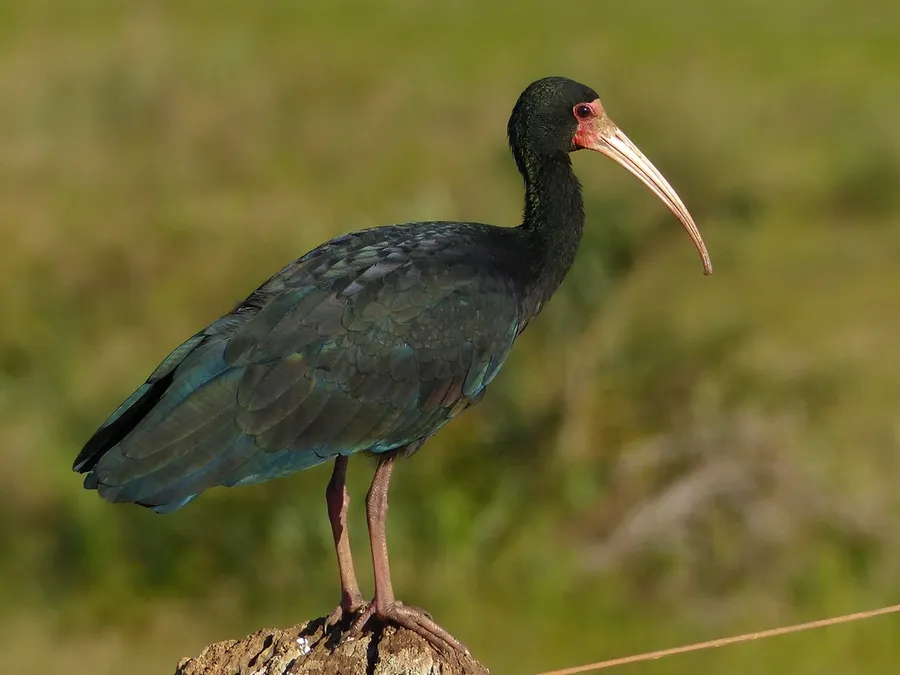
Photo © Bernard DUPONT · CC BY-SA · iNaturalist · all photo credits
- Scientific name
- Phimosus infuscatus
- Family
- Ibises and Spoonbills
- Size
- About 48 cm
- Habitat
- Wet fields, marsh edges and rice fields
- Found in
- South America
The key marks
Smallish dull dark brown ibis with a bare reddish face, a long curved pinkish-orange bill and pink legs, often in flocks on wet fields. Puna Ibis is larger and glossier, with a long red bill and a chestnut head when breeding.
Voice
Low, nasal grunting calls.
Good to know
It probes soft ground and water edges for insects and worms, and often feeds and nests alongside other ibises.
Do not confuse with
Compare it with the Puna Ibis. Look at the marks above one by one rather than the overall colour, and practise telling the two apart with real photos.
Where and when
You can expect to find it in wet fields, marsh edges and rice fields. It is especially common in Colombia. Distribution changes with the seasons and from year to year, so check a recent local observation source before you go looking.