
Kelp Gull: how to recognise it
A bird seen on most continents. Learn the marks that make it easy to identify, then practise with real photographs in Lore.
Practise with real photosAll species guides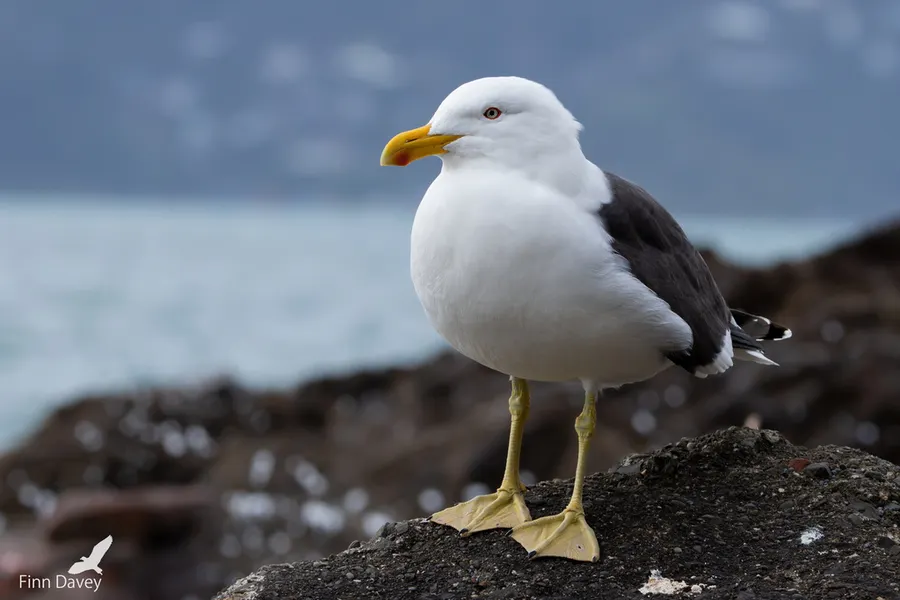
Photo © Finn Davey · CC BY-NC · iNaturalist · all photo credits
- Scientific name
- Larus dominicanus
- Family
- Gulls, Terns, and Skimmers
- Size
- About 58 cm
- Habitat
- Coasts, beaches, harbours and rubbish tips
- Found in
- Europe, Africa, North America, South America and Oceania
The key marks
Large gull with a jet black back and wings, a white head and body, a yellow bill with a red spot and dull greenish legs. European Herring Gull has a pale grey back and pink legs.
Voice
Loud, ringing calls like other big gulls, with a repeated 'kyow'.
Good to know
On the coast of Argentina, Kelp Gulls have learned to peck at the backs of living southern right whales to eat their skin and blubber.
Do not confuse with
Compare it with the European Herring Gull. Look at the marks above one by one rather than the overall colour, and practise telling the two apart with real photos.
Where and when
You can expect to find it in coasts, beaches, harbours and rubbish tips. It is especially common in Chile, New Zealand and South Africa. Distribution changes with the seasons and from year to year, so check a recent local observation source before you go looking.