
Species guide
Wood Duck: how to recognise it
A bird seen on most continents. Learn the marks that make it easy to identify, then practise with real photographs in Lore.
Practise with real photosAll species guides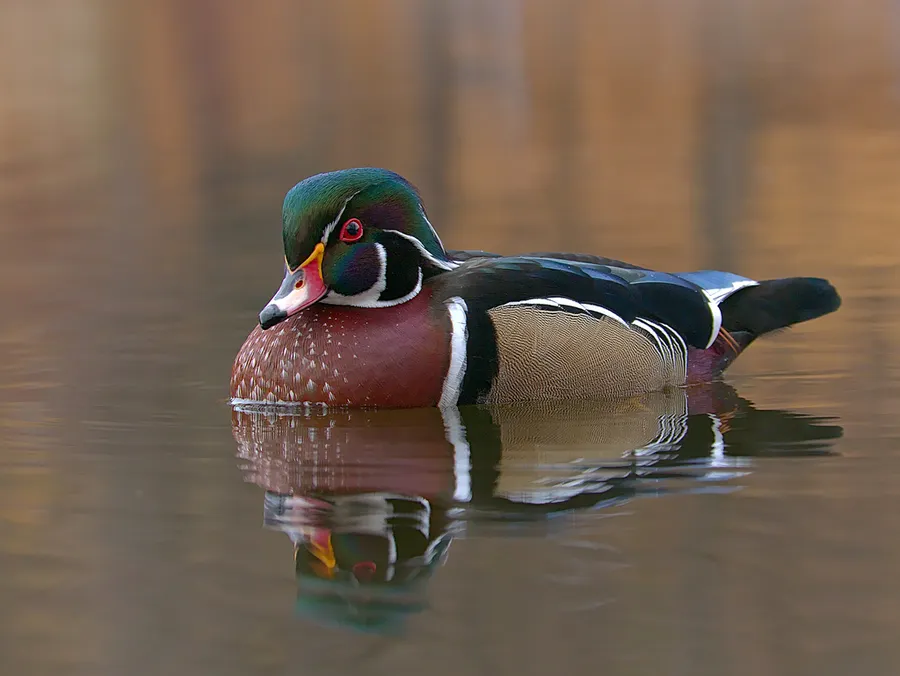
Photo © Kent Ross · CC BY-NC · iNaturalist · all photo credits
- Scientific name
- Aix sponsa
- Family
- Ducks, Geese, and Swans
- Size
- About 47–54 cm
- Habitat
- Wooded swamps and ponds
- Found in
- Europe, Africa, Asia, North America, South America and Oceania
The key marks
The male is multi-coloured: a glossy green crested head with white stripes, a red eye and a chestnut breast. The female is grey-brown with a white teardrop around the eye.
Voice
A rising whistle from the female, “oo-eek”.
Good to know
It nests in tree holes, and the ducklings jump to the ground about a day after hatching.
Where and when
You can expect to find it in wooded swamps and ponds. It is especially common in Canada. Distribution changes with the seasons and from year to year, so check a recent local observation source before you go looking.